Dublin Fog No.2
My last attempt at a stout was so good that I'm doing it again almost immediately. The recipe will be largely the same but we'll get on to that later because the most exciting change is that I'm brewing again with this yeast:
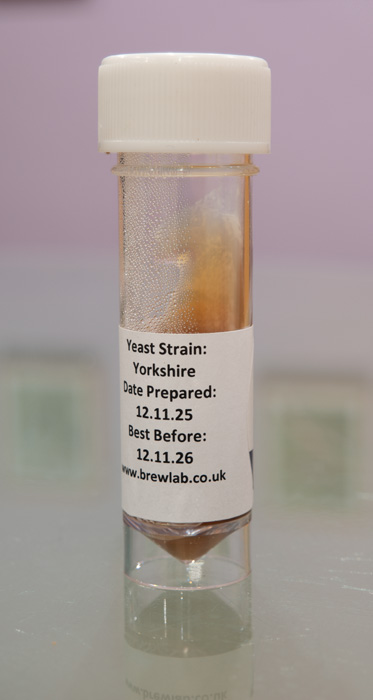
Brewlab Yorkshire is my favourite of all the yeast strains I've used so far. It's got the best smooth flavour and is the most fun and characterful to brew with. Your can read about the first time I used it back here.
Yeast starter
The Brewlab yeast arrives on an Agar slope and needs waking up with a small 300ml starter before you can build it up to the size required to pitch into the brew. So I started more than a week in advance of brew day and prepared a 300ml starter.
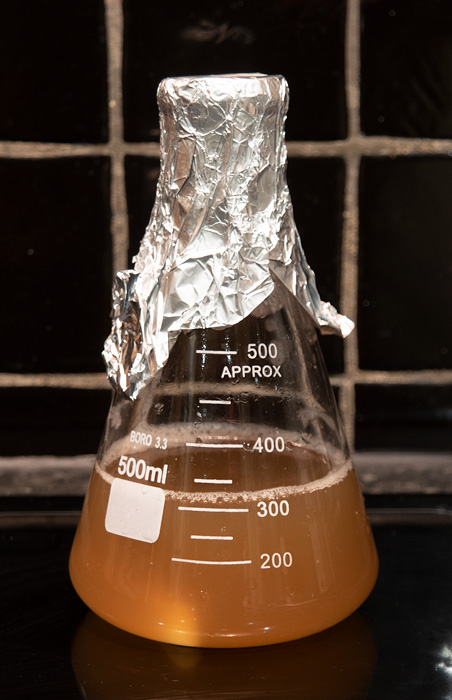
A small amount of starter wort is added to the yeast vial, shaken to dislodge the cells from the Agar and then the mixture, without the Agar, is tipped back into the starter flask. This first step takes a while to get going and after 48 hours of nothing happening it very quickly let me know it was awake:
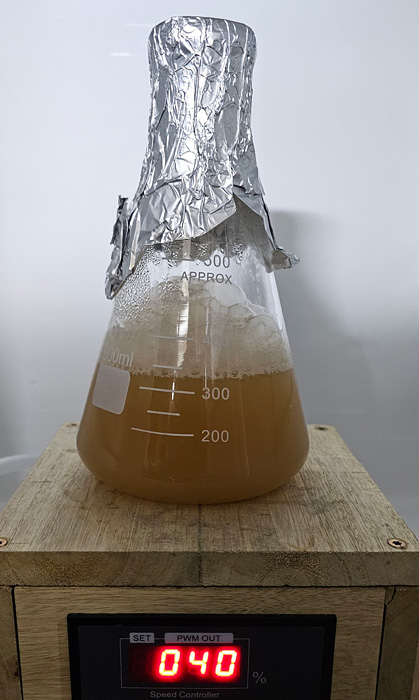
Another 12 hours later and I'm wondering if it's going to climb out of the starter jar already. There's never a dull moment with this yeast.
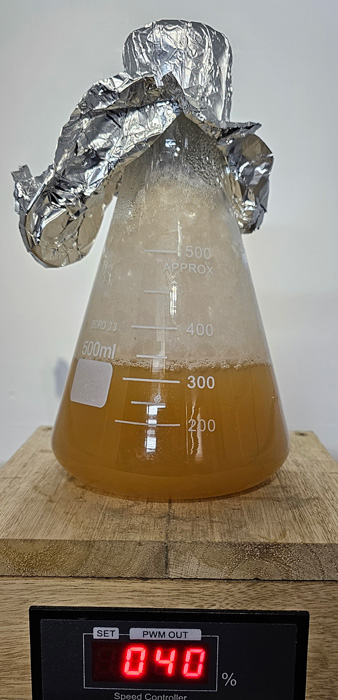
Thankfully that was the end of the action and it died back soon after this photograph was taken so I immediately got going with the 1.5 litre starter that I always make. One litre will go into the beer and 500ml will go into the fridge for future use. I took the hint from the way that the previous 300ml starter had behaved and added a single drop of antifoam to the wort to head off any potential overflow issues. After two days it looked like this:
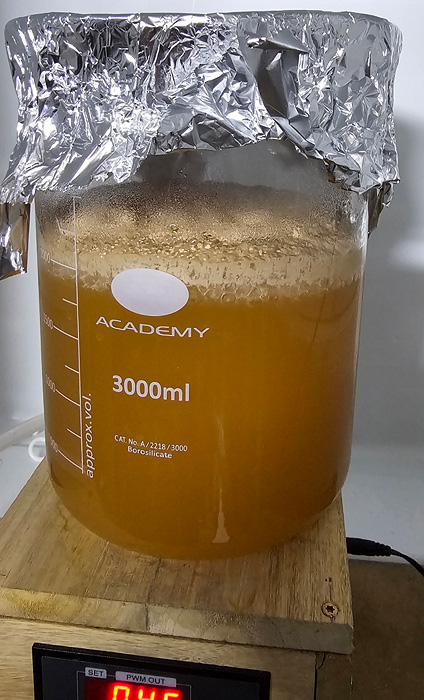
It never got any higher than that, in fact the krausen didn't want to drop at all so after 3 full days I switched it off, separated the 500ml for the fridge and left the remaining litre to chill in the fridge for brew day.
Brew day
So, on to brew day and here's the recipe that I followed.
Recipe Specifications
--------------------------
Date: 1 Feb 2026
Batch Size (fermenter): 24.00 L
Estimated OG: 1.050 SG
Estimated Color: 91.4 EBC
Estimated IBU: 45.7 IBUs
Brewhouse Efficiency: 75.00 %
Est Mash Efficiency: 75.6 %
Boil Time: 60 Minutes
Water profile: Ca:60 Mg:10 Na:10 SO4:33 Cl:90

Ingredients:
Amt         Name                                             Type         %/IBU
30.07 L     Tesco Water                                      Water        -
3.00 g      Calcium Chloride (Mash)                          Water Agent  -
1.30 g      Epsom Salt (MgSO4) (Mash)                        Water Agent  -
0.10 ml     Lactic Acid (Mash)                               Water Agent  -
3.400 kg    Crisp Clear Choice Extra Pale Malt (4.0 EBC)     Grain        64.2 %
1.000 kg    Barley, Flaked (3.0 EBC)                         Grain        18.9 %
0.500 kg    Roasted Barley (Simpsons) (1600.0 EBC)           Grain        9.4 %
0.400 kg    Medium Crystal (Crystal 240) (Crisp) (100.0 EBC) Grain        7.5 %
0.60 g      Calcium Chloride (Sparge)                        Water Agent  -
0.30 g      Epsom Salt (MgSO4) (Sparge)                      Water Agent  -
0.30 ml     Lactic Acid (Sparge)                             Water Agent  -
37.00 g     Target [11.30 %] - Boil 60.0 min                 Hop          45.7 IBUs
1.00 Items  Whirlfloc Tablet (Boil 7.0 mins)                 Fining       -
1.0 pkg     Brewlab Yorkshire (Brewlab #Yorkshire)           Yeast        -

Mash Schedule: Single Infusion, Full Body
Total Grain Weight: 5.300 kg
----------------------------
Name     Description                      Step Temperat Step Time
Mash In  Add 25.07 L of water at 71.3 C   67.0 C        60 min

Sparge: Dunk sparge with 5.00 L water at 75.6 C
The recipe is, for all intents and purposes the same as the last one except that I added 100g more pale malt, 100g more crystal and that crystal is 240 rather than 150. I don't expect this to make any appreciable difference to the beer. The yeast this time is of course the Brewlab Yorkshire and it'll be interesting to see if I can tell the difference between that and the WLP002 (Fullers) that I used the last time.
Anyway, brew day went off hitch-free and I was prepared this time for missing the OG target, which I did, with the OG coming out at 1.046. This has been accounted for and I'm still expecting to hit around 5% ABV when it's all finished.
I collected about 24 litres into the fermenter and set the temperature for 20C for the duration of the fermentation. This was about midday and by the late evening the Yorkshire yeast had started to show signs of fermentation.
Kegging day
I kegged this after about 16 days in the fermenter. All signs of active fermentation had stopped long ago and there was still the odd burst of bubbling from off-gassing. I remember this being a feature of the Yorkshire yeast from the last time I used it. Just when you'd be certain it was OK to keg the beer it would let out a burst of bubbles to unnerve you.
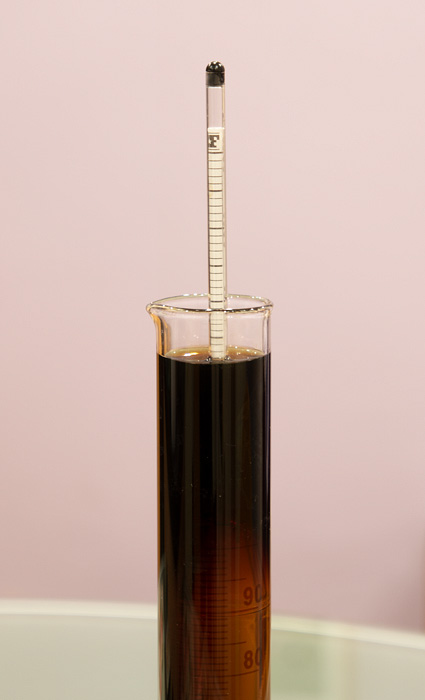
The final gravity was 1.007, giving an ABV of 5.1% which I think is a bit more on the mark for a good stout than the 4.7% that I hit the last time. The sample jar was very dark indeed and tasted complex and young. I think this one is going to come out jet black in the glass and tastes like it will benefit from a longer conditioning period than the usual two weeks. I think if I can keep off it for a month then it will be at its best.
Tasting notes
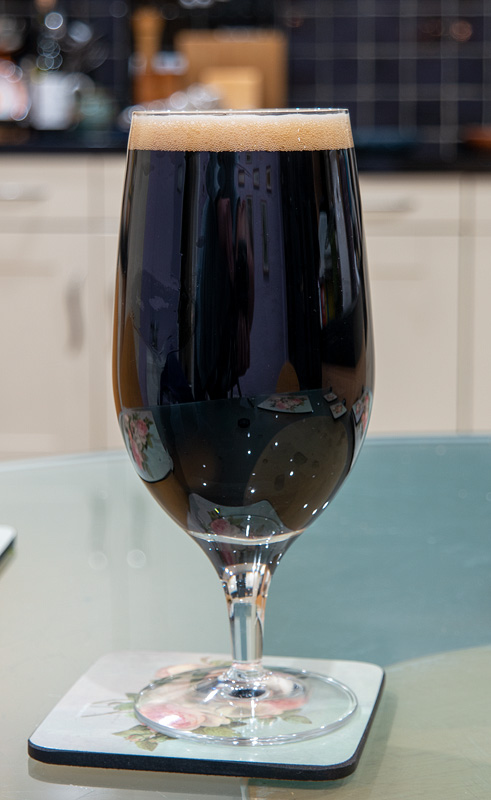
This needed a relatively long maturation time, 4 weeks or so, to bring all the flavours together. In the end though, I prefer the original receipe to this one with the extra crystal malt. While this one is indeed a fine stout, I prefer the more authentic taste of the original.